This 1970s TV Actor Left His Entire – Surprisingly Large – Fortune To The State That Made Him World Famous
ByPaula Wilsonon February 12, 2025inArticles›Entertainment
In Hollywood, where fortunes are built on fame and often squandered just as quickly, it’s not unusual to hear about stars leaving their wealth to family, charities, or even extravagant pets. But one beloved 1970s TV icon did something completely unexpected. When the final credits rolled on his life, he didn’t pass his fortune to a spouse, a distant relative, or even an old friend. Instead, he left every last dime to the very place that turned him into a household name.
This wasn’t just any ordinary estate, either. It was a surprisingly vast fortune—far larger than anyone would have guessed for an actor best known for a single legendary role. And while some Hollywood stars are known for their extravagant lifestyles, this man lived a much quieter, almost reclusive life in his later years. Yet, when his will was revealed, it stunned the public and cemented his legacy in a way few could have predicted.
So who was this enigmatic star, and why did he leave his millions to an entire state? Let’s dive into the incredible story of a man whose most surprising role may have come after his final bow.
(via Getty)
Early Life
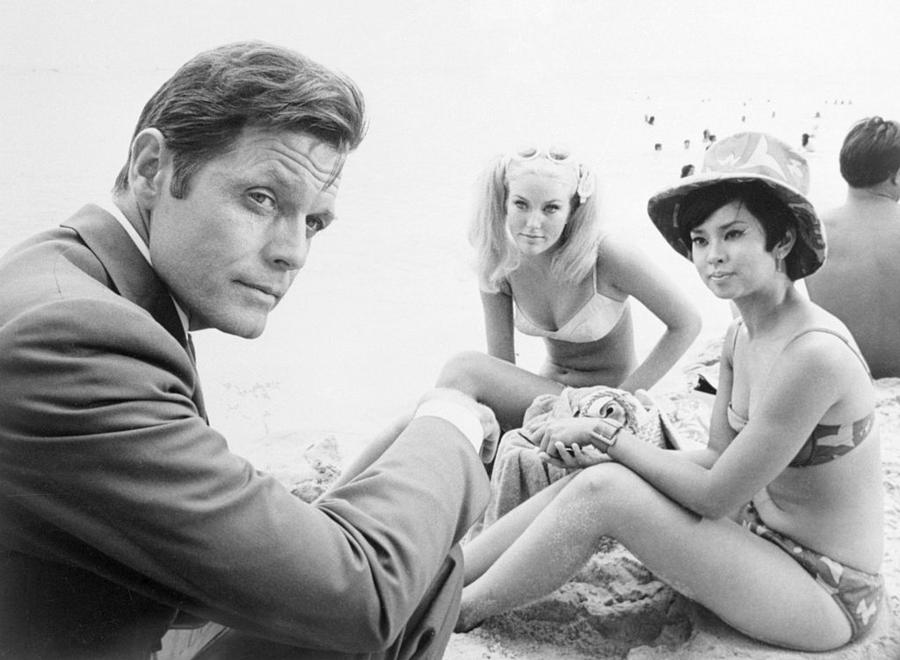
Jack Lord , also known as John Joseph Patrick Ryan , was born on December 30, 1920, in Brooklyn, New York. The young Jack was an interesting mix of contrasts. He was an excellent horseman, learning to ride on his mother’s fruit farm in upstate New York. He also spent many summers at sea and showed real talent as a painter. He often painted landscapes of the countries and lands he passed by boat, including China, the Mediterranean, and portions of the coast of Africa. He went on to attend the United States Merchant Marine Academy and graduated as an Ensign. From there, he secured a football scholarship to New York University, where he earned a degree in Fine Arts. He then built bridges in Persia during World War II and also began appearing in training films for the Merchant Marine.
Acting Career
The training films were his first experience with acting, but he was almost instantly hooked. When he returned to New York, he began working in sales in order to fund his newfound interest in performing. He worked as a car salesman for both Ford and Cadillac in order to pay for his classes with Sanford Meisner at the Neighborhood Playhouse and for his courses at the Actors Studio. He appeared in his first commercial film project, “The Red Menace,” in 1949. However, it wasn’t until 1954 that his hard work really began to pay off. That year, he made his Broadway debut in “The Traveling Lady” by Horton Foote. He earned a Theatre World Award for his work, and it was clear that he was a star on the rise.
He went on to appear in the Broadway production of “Cat on a Hot Tin Roof” the following year. From there, more film work beckoned. He starred in 1957’s “Williamsburg: The Story of a Patriot” and 1958’s “God’s Little Acre.” He originated the role of Felix Leiter in the James Bond film “Dr. No,” and then starred on the television series, “Stoney Burke.” He also appeared in guest starring roles on such shows as “The Americans,” “Bonanza,” “High Chaparral,” “The Man from U.N.C.L.E.,” “Rawhide,” and “Ironside,” among many others.
A Big Demand
Perhaps most famously, Jack Gene Roddenberry’s first choice to play Captain James T. Kirk on an up-and-coming little science fiction series called “Star Trek.” Unfortunately, that reality never came to be after Jack demanded a 50% ownership stake in the show. Roddenberry cast William Shatner instead, and the rest is sci-fi history.
Hawaii 5-0
In 1968, Jack began appearing as Steve McGarrett on the cop show, “Hawaii 5-0.” Jack would go on to appear in all 281 episodes over 12 seasons through 1980. At the time the show ended, it was the longest-running cop show in television history. His signature line, “Book him, Danno!” became a catchphrase. The show was instrumental in popularizing Hawaii, specifically Honolulu, to millions of mainstream Americans. Jack was also insistent that the show hire local Hawaiian actors as opposed to actors flown in from the mainland.
And where Jack’s demand for 50% ownership of “Star Trek” was rejected, he was a bit more successful with his “Hawaii 5-0” negotiations. Before agreeing to appear in the series, Jack requested and received a 1/3 ownership stake in the show. When the show’s creator, Leonard Freeman, died in 1974, Jack struck a new deal that gave him 100% creative control over the series.
A Surprisingly Large Surprise
In 1988, Jack and his wife Marie established a charitable fund with the Hawaii Community Foundation, seeding it with an initial $50,000. They personally selected 12 local charities to support, reflecting causes close to their hearts. Jack and Marie had no children and, over time, they continued adding to the fund. By the time Jack died in 1998, they had given the foundation $750,000.
Jack’s wife, Marie Lord, lived to be 100 years old, dying in 2005. Upon her death, the state of Hawaii learned that the couple was leaving the value of their entire estate to the Hawaii Community Foundation.
But how rich could an actor who starred in a few 1960s and 1970s TV shows really be???
As it turned out, the couple had invested their money well. At the time of Marie’s death, their estate was worth $40 million . That’s the same as around $65 million in today’s dollars. It was one of the largest charitable contributions in the state’s history at that time.
Upon Marie’s passing in 2005, the $40 million estate was used to establish the Jack and Marie Lord Fund at the Hawai’i Community Foundation. To this day, this fund generates an estimated $1.6–$2 million every year for charitable grants, providing a stable, permanent source of funding for the 12 beneficiary organizations. Each of the charities has been able to expand programs or launch new initiatives thanks to the Lords’ philanthropy. Below is a breakdown of how key recipients have used the funds and the initiatives made possible:
- Hospice and Healthcare: Hospice Hawai’i and St. Francis Hospice have been bolstered by the Lord Fund, allowing them to care for more patients and support families saying their final goodbyes. The stable annual support has helped hospice programs expand outreach and grief counseling services for island residents. St. Francis Healthcare Foundation has also benefited, helping it to continue its mission of compassionate end-of-life care.
- Vision and Disability Services: Several of the chosen charities focus on people with disabilities. Guide Dogs of Hawai’i used the Lord Fund to provide guide dogs and cutting-edge assistive technology to blind and visually impaired individuals. This meant more blind residents could receive professionally trained service dogs, along with tools like screen-reading software or mobility aids, at no cost. Similarly, the Hawai’i Lions Eye Foundation has supported vision-saving surgeries and cornea transplants for patients statewide. With the Lords’ gift, the Lions have been able to underwrite more eye surgeries and expand their eye tissue bank, restoring sight for many island residents.
- Education and Youth Programs: The Lords’ philanthropy has had a huge impact on education and youth development in Hawai’i. A portion of the bequest helped PBS Hawai’i create “HIKI NŌ,” the nation’s first statewide student news network. Through HIKI NŌ, middle and high school students from public, private, and charter schools learn journalism, video production, and storytelling. Other educational beneficiaries include The Arc in Hawai’i and Variety School of Hawai’i , both of which serve children and adults with special needs. These organizations have enhanced vocational training and community integration programs, providing greater opportunities for individuals with disabilities.
- Arts, Culture & Community Enrichment: Jack Lord was an artist himself, and the couple’s legacy also enriched Hawaii’s arts and cultural institutions. The Honolulu Museum of Art and the Bishop Museum both receive annual grants, which have supported museum programs that preserve Hawaiian history and bring art to the local community. The Hawaiian Humane Society was another beneficiary, funding programs that rescue and care for abused or homeless pets. Even USO Hawai’i was on their list, ensuring continued support for servicemembers and their families. The Salvation Army’s Hawai’i Division used part of the bequest to help construct the Jack and Marie Lord Worship & Performing Arts Center at the Kroc Center in Kapolei, a facility that serves the local community with arts programming and youth development activities.
Lasting Effects on Hawai’i’s Nonprofit Community
The ripple effects of the Lords’ $40 million donation are still felt nearly two decades later. The creation of the Jack and Marie Lord Fund ensured that these 12 nonprofits have ongoing funding streams, not just a one-time boost. Each year, between $32,000 and $340,000 is disbursed to each charity. This reliable annual support has allowed long-term planning and stability. Leaders from several recipient groups have stated that the Lords’ endowment enabled them to expand services to meet community demand that they otherwise couldn’t have afforded.
Honoring Jack and Marie Lord’s Legacy
Jack and Marie Lord have been honored in various ways by the organizations and communities they helped. A particularly visible tribute is the bronze bust of Jack Lord at Kahala Mall in Honolulu, funded by fans. A plaque nearby acknowledges his contributions to Hawai’i – both cultural and charitable. The Salvation Army’s Kroc Center named its theater the “Jack and Marie Lord Worship & Performing Arts Center,” ensuring every visitor knows who helped make the venue possible. PBS Hawai’i and the Hawaiian Humane Society continue to recognize their contributions through donor honor rolls and programs named in their memory.
Jack Lord’s famous “Be here. Aloha.” sign-off at the end of Hawaii Five-0 resonates more deeply now. The Lords’ generosity has ensured that their love for Hawai’i endures, leaving a legacy of giving that benefits the islands in perpetuity. Their final act of philanthropy truly exemplifies the spirit of aloha, touching countless lives across Hawai’i.
- Jack Lord Net Worth
- The 20 Largest Private Foundations In the US: And Where Their Money Came From
- When Ben Franklin Died In 1790, He Left Behind Two Trust Funds That Gathered Interest For The Next 200 Years…
- In 1962, A Man Left 780 Shares Of A Random Rubber Company Called “Nokia” To His Hometown – But The Shares Couldn’t Be Sold…
- Dr. Dre Donates $10 Million For The Construction Of Compton High School’s Performing Arts Center
- This Self-Made Millionaire Is Changing the World One Neighborhood At A Time… And You’ve Probably Never Heard of Him
When Ben Franklin Died In 1790, He Left Behind Two Trust Funds That Gathered Interest For The Next 200 Years…
ByBrian Warneron May 12, 2025inArticles›Entertainment
Benjamin Franklin is easily one of the five greatest United States Presidents of all time. Fittingly, that is why today his face graces our most common paper note, the twenty-dollar bill. You probably have some in your wallet right now.
Ok, before we go any further… did anything I just said seem off to you?
Think about it….
.
.
.
.
Eagle-eyed readers may have noticed that Ben Franklin does NOT appear on the twenty-dollar bill (that’s Andrew Jackson). He appears on the hundred-dollar bill . AKA the Benjamin. The Benji. The Franklin. The hundy. The hundo. The C-note.
Oh, and I’m also sorry to report that Benjamin Franklin was never President 🙂 Did I trick you? Be honest… is your fifth-grade teacher punching a wall right now?? 🙂
Anyway. Despite never holding the presidency, Franklin’s face graces the highest-denomination bill in circulation—a nod to just how profoundly he shaped America. Inventor, diplomat, writer, philosopher, Founding Father… and, as you’re about to see, financial mastermind.
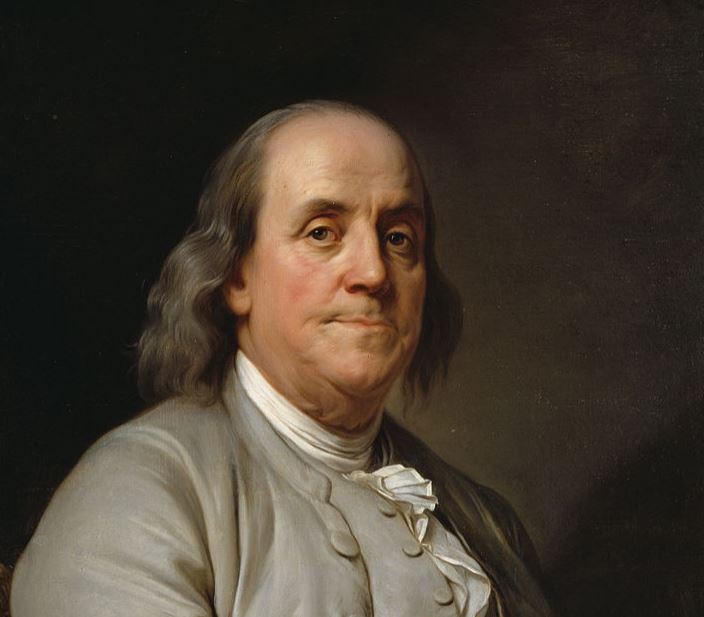
When Benjamin Franklin died in 1790, Franklin left behind two trust funds—each worth £1,000 for his beloved cities of Boston and Philadelphia. But he didn’t want the money spent right away. He wanted to give compound interest a couple centuries to work its magic.
(Public Domain)
From Apprentice to Icon
Born in Boston in 1706, Benjamin Franklin was the 15th of 17 children in a working-class family. He left school at age 10 and became an apprentice printer to his older brother. By 17, he had moved to Philadelphia with little more than ambition and a knack for self-education. Over the next several decades, Franklin built a printing empire, publishing newspapers, books, and the wildly popular Poor Richard’s Almanack. His business success—and later government positions—made him one of the wealthiest and most respected men in the colonies.
But Franklin didn’t hoard his wealth. He retired from business in his early 40s and devoted the second half of his life to public service, science, and diplomacy. He helped found the first public library in America, the University of Pennsylvania, and what would become the U.S. Postal Service. He also served as ambassador to France, helped draft the Declaration of Independence, and negotiated the peace treaty that ended the Revolutionary War.
When Franklin died at age 84, he was comfortably wealthy. As we mentioned, he was comfortable enough to leave £1,000 to his two beloved cities, Boston and Philadelphia. The money came specifically from his salary as Governor of Pennsylvania from 1785 to 1788—a sum he reportedly believed he shouldn’t have been paid in the first place. Franklin famously argued that public servants in a democracy should not earn salaries, and even tried (unsuccessfully) to get that idea written into the Constitution.
Btw, why did he use pounds sterling instead of US dollars? At the time, the American financial system was still in its infancy. The U.S. dollar wouldn’t be formally established until the Coinage Act of 1792, two years after Franklin’s death. So he chose the most stable of the many currencies that were in circulation.
The Long Game
Franklin’s idea for the trusts wasn’t random. It was sparked by a satirical essay from French mathematician Charles-Joseph Mathon de la Cour, who wrote about the idea of leaving money to grow over centuries through compound interest. Franklin saw potential in turning the theory into real-world philanthropy.
He instructed that the money be loaned to young tradesmen—“young married artificers,” as he called them—who could repay the loans over ten years with 5% interest. After 100 years, a portion of the funds could be used for public works. The rest would continue compounding for another 100 years, at which point it could all be distributed.
Boston’s Big Bet
Boston took a bolder approach to managing its trust, allowing investments in the stock market. After 100 years, the fund had grown to $391,000, some of which helped establish the Franklin Union, a trade school partially funded by Andrew Carnegie that still operates today as the Benjamin Franklin Cummings Institute of Technology.
By 1990, Boston’s trust was worth nearly $4.5 million. But when it came time to distribute the funds, things got messy. A 1958 Massachusetts law had tried to earmark the money for the Franklin Institute technical school, but the state’s Supreme Judicial Court later ruled that the trust could not be prematurely terminated. Legal battles erupted over who had the rightful claim to the millions—city officials, the state, or the school itself. Eventually, the Massachusetts Attorney General ruled that 26% should go to the City of Boston and 74% to the Commonwealth of Massachusetts, as Franklin had originally outlined.
Ultimately, both the city and the state used their shares to continue funding technical education and training programs, honoring Franklin’s vision of supporting trades and applied sciences.
Philadelphia’s Slower Growth
Philadelphia’s fund grew more slowly—by 1907, it had reached $172,000, and much of it was used to help build the Franklin Institute, the city’s iconic science museum. By 1990, the fund had reached $2 million.
As in Boston, arguments erupted over what to do with the money. The city’s share—about $520,000—was eventually designated for grants to high school graduates pursuing trade careers, which honored Franklin’s original wishes. The remaining $1.5 million was allocated by the state legislature to various community foundations across Pennsylvania, forming Ben Franklin Funds that supported educational and community initiatives like early childhood literacy and vocational training.
Legacy of a Financial Visionary
Next time you spot Ben Franklin’s face on a $100 bill, remember—that’s no fluke. Franklin wasn’t just a founding father; he was arguably the first American to truly grasp the power of long-term investing. He understood the value of money, the value of time, and most importantly, the extraordinary things that can happen when the two are combined.
His £2,000 bequest grew to more than $6.5 million over two centuries. And it didn’t just sit in a vault. It funded schools, scholarships, scientific institutions, and job training programs. It helped real people, just as Franklin intended.
He didn’t just shape a nation. He engineered a financial legacy that still pays off, 200 years later.. He timed a legacy. And more than 200 years later, that legacy is still paying dividends.
Want a modern example of how powerful compounding can be? Here’s what $100 invested in various ways would be worth today:
S&P 500 (since 1957): $70,000 , assuming reinvested dividends
Google at IPO in 2004: Roughly $4,000
Warren Buffett’s Berkshire Hathaway in 1965: Roughly $2.6 million
Bitcoin in 2010: A staggering $81 million
The Richest American Presidents Of All Time After Adjusting For Inflation
This 1970s TV Actor Left His Entire – Surprisingly Large – Fortune To The State That Made Him World Famous
The 20 Largest Private Foundations In the US: And Where Their Money Came From
Warren Buffett Net Worth
How Harold Alfond Turned A $1,000 Abandoned Shoe Factory Into 1.6% Of Warren Buffett’s Berkshire Hathaway
In 1962, A Man Left 780 Shares Of A Random Rubber Company Called “Nokia” To His Hometown – But The Shares Couldn’t Be Sold…
