Russia’s 78th Richest Person Was Caught Trying To Flee The Country On His Private Jet. His Assets Are Now Frozen And His Passport Is Canceled
ByBrian Warneron July 7, 2025inArticles›Billionaire News
In a dramatic escalation of Russia’s ongoing crackdown on the country’s oligarch class, billionaire gold magnate Konstantin Strukov was stopped from fleeing the country aboard his $50 million private jet over the weekend. Authorities grounded the plane at the last minute, confiscated his international passport, and formally launched proceedings to nationalize his vast mining empire.
Strukov, the CEO and majority shareholder of Yuzhuralzoloto (also known as UGC), Russia’s third-largest gold producer, was reportedly attempting to fly from the Chelyabinsk region to Turkey on Saturday, July 6, when federal aviation officials intervened. Footage published by Russian business outlet Kommersant shows Strukov sitting inside the jet as bailiffs and security officers stand nearby. According to officials, the plane’s legal status had been “arrested,” and the Interior Ministry had already voided Strukov’s passport.
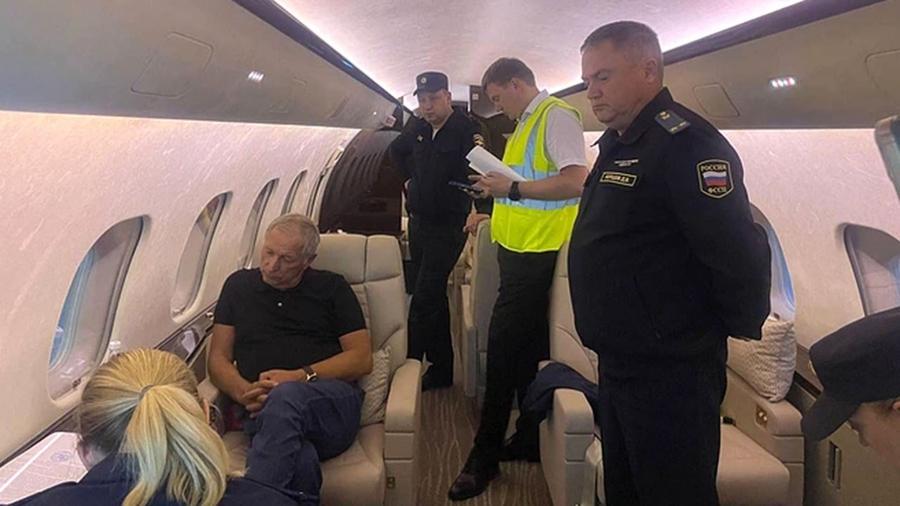
This attempted departure came just days before a scheduled July 8 court hearing in which Russian prosecutors are seeking to seize Strukov’s controlling stake in UGC and transfer it to the state. His case is part of a broader trend: In recent months, Moscow has ramped up its efforts to nationalize assets from both foreign companies and politically vulnerable domestic billionaires. Authorities have accused Strukov of acquiring his holdings through corruption, misusing bankruptcy procedures, and funneling wealth to offshore entities tied to relatives in so-called “unfriendly” countries.
Despite footage showing him on the jet, representatives for Yuzhuralzoloto deny he attempted to flee, claiming he was working from the company’s Moscow office that day.
From Coal Miner to Gold Magnate
Born in 1958 in Russia’s Orenburg region, Konstantin Strukov’s career began in the mining sector shortly after graduating from the Magnitogorsk State Technical University. He entered the industry during a period of immense economic upheaval: the post-Soviet privatization boom of the 1990s.
Yuzhuralzoloto was originally founded in 1976 as a Soviet state enterprise. By the time Strukov entered the picture in the mid-1990s, the company was unprofitable and struggling. In 1997, he assumed control, and through a controversial restructuring process, transferred assets—including the valuable Svetlinsky gold deposit in the Urals—to a newly formed company under the same name. That predecessor firm then declared bankruptcy.
According to Kommersant, Strukov acquired control of the company’s critical assets and shares for just 12.8 million rubles (approximately $160,000 at the time). With new holdings in the Khakassia and Krasnoyarsk regions, Yuzhuralzoloto resumed gold production and began an aggressive expansion.
Between 2004 and 2012, annual gold output tripled from three metric tons to ten. As of 2024, the company operated 17 core mining assets and eight processing facilities across its two major regional bases. Despite regulatory pressure that forced the closure of several mines, UGC still managed to produce 10.6 metric tons of gold last year, generating 25 billion rubles ($320 million) in revenue—though it posted a net loss of 7.2 billion rubles ($90 million).
At the end of 2024, Strukov owned 67.8% of UGC. Another 22% stake was sold to a Gazprombank-linked entity, and the remaining 10% was floated on the Moscow Exchange. Before his recent troubles, Strukov’s net worth was $2 billion , ranking him as the 78th richest person in Russia .
Montenegro Villa
Last year, a “Travel Motivation” YouTube account flew a drone over a massive, incredible villa hidden above a peninsula called Luštica in southwestern Montenegro. The account claims this villa owned by Konstantin. Check it out. Ya, if I owned this, I’d be trying to flee here as well:
Political Clout and Offshore Fortunes
Strukov isn’t just a businessman—he’s also a longtime political insider. Since 2000, he has served as a deputy speaker in the Chelyabinsk regional legislative assembly and is a member of the ruling United Russia party. Prosecutors now argue that he used his political position to influence state asset sales and shield his business operations from scrutiny.
In court documents reviewed by Kommersant, prosecutors allege that Strukov funneled profits into European offshore entities, including one in Cyprus that concealed his personal stake in UGC.
The central bank suspended trading in UGC’s shares after their value plummeted by nearly 30% in two days. The company issued a statement assuring investors that protecting minority shareholders’ rights was a top priority.
Part of a Broader Trend
Since Russia’s full-scale invasion of Ukraine in 2022, the Kremlin has tightened its grip on the economy and launched aggressive asset seizures targeting both Western companies and domestic oligarchs. Initially framed as retaliation for international sanctions, the seizures have increasingly affected Russian billionaires viewed as disloyal, overexposed to the West, or politically expendable.
It’s unclear why Strukov was targeted now—he remains a member of the ruling party and hasn’t publicly opposed the Kremlin. Some analysts speculate that the nationalization push is part of a broader effort to reassert state control over strategic resources like gold, oil, and agriculture, particularly as foreign capital dries up and Russia faces mounting fiscal pressures.
But Strukov wouldn’t be the first billionaire to discover just how precarious wealth and power can be in Putin’s Russia. In 2003, oil tycoon Mikhail Khodorkovsky —then the richest person in the country and CEO of Yukos —was arrested on charges of fraud and tax evasion. Many saw the case as politically motivated, stemming from Khodorkovsky’s support for opposition parties and perceived challenge to the Kremlin’s authority. He was sentenced to nine years in prison, ultimately serving a decade behind bars before being pardoned in 2013.
Khodorkovsky’s dramatic fall from the top of Russia’s rich list to a prison cell remains a chilling reminder that, in Russia, no fortune is safe if it’s viewed as a threat—or simply becomes too tempting to ignore. Whether Konstantin Strukov faces a similar fate is still uncertain. But his grounded jet, frozen assets, and revoked passport suggest that when the Kremlin comes for your empire, even being a billionaire may not buy you a way out.
- One Minute He Was The Richest Person In Russia. The Next Day He Was Sent To A Siberian Prison. The Real Life Nightmare Of Mikhail Khodorkovsky
- Basketball Billionaire Facing Full Court Press From Kremlin
- Mikhail Khodorkovsky Net Worth
- Switzerland Seizes Holiday Home Of Russian Billionaire Petr Aven
- Already-Sanctioned Russian Billionaire Andrey Melnichenko Now Hit With Lawsuit From Russian Prosecutors
- US Authorities Move To Seize $90 Million Plane And $156 Million Yacht Owned By Russian Billionaire Andrei Skoch
One Minute He Was The Richest Person In Russia. The Next Day He Was Sent To A Siberian Prison. The Real Life Nightmare Of Mikhail Khodorkovsky
ByAmy Lamareon July 7, 2025inArticles›Entertainment
Picture this: The year is 2003, and you’re the richest person in Russia and the 16th richest person in the world thanks to your $15 billion net worth. One day, you wake up feeling pretty good about life. The very next day, you wake up in a Siberian prison.
You stay in that prison, not for a week or a few months. You rot there for the next 10 years .
During that horrible decade, your wealth evaporates into the hands of your arch enemy. Sound too unbelievable to be a true story? It almost sounds like a really bad nightmare. Well, unfortunately, this is exactly what happened to former Russian business tycoon Mikhail Khodorkovsky . His only crime? He dared to be a capitalist and was a vocal critic of Vladimir Putin …
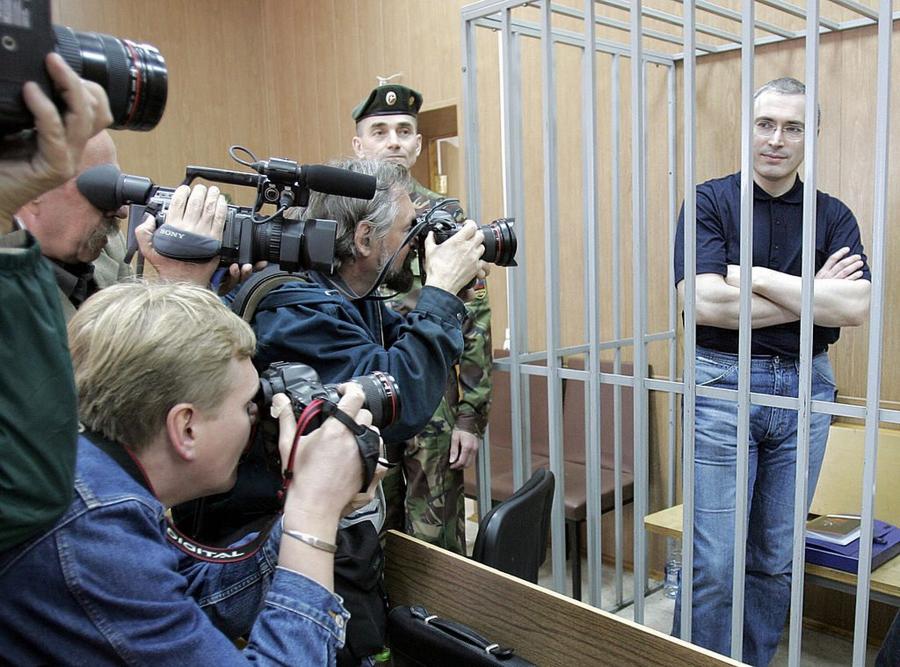
Mikhail Khodorkovsky / TATYANA MAKEYEVA/AFP/Getty Images
The Rise of a Reluctant Capitalist
Mikhail Khodorkovsky was born on June 26, 1963, in Moscow to two chemical engineers. Raised in a modest two-room apartment, he showed early signs of ambition. As a student, he joined the Communist Youth League (Komsomol) and began importing computers under its banner, exploiting a loophole that allowed him to convert administrative rubles into cash. In 1986, he earned a degree in chemical engineering from the Mendeleev Moscow Institute of Chemistry and Technology.
With Mikhail Gorbachev’s perestroika reforms came opportunity. In 1986, Khodorkovsky opened a small café.
A year later, he co-founded Bank Menatep, one of Russia’s first private banks. He used the bank to fund import-export ventures and amass capital while the old Soviet guard still viewed entrepreneurship as suspect. As he would later recall:
" Many years later I talked with people and asked them, why didn’t you start doing the same thing? Why didn’t you go into it? Because any head of an institute had more possibilities than I had, by an order of magnitude. They explained that they had all gone through the period when the same system was allowed. And then, at best, people were unable to succeed in their career and, at worst, found themselves in jail. They were all sure that would be the case this time, and that is why they did not go into it. And I" —Khodorkovsky lets out a big, broad laugh at the memory — “I did not remember this! I was too young! And I went for it. "
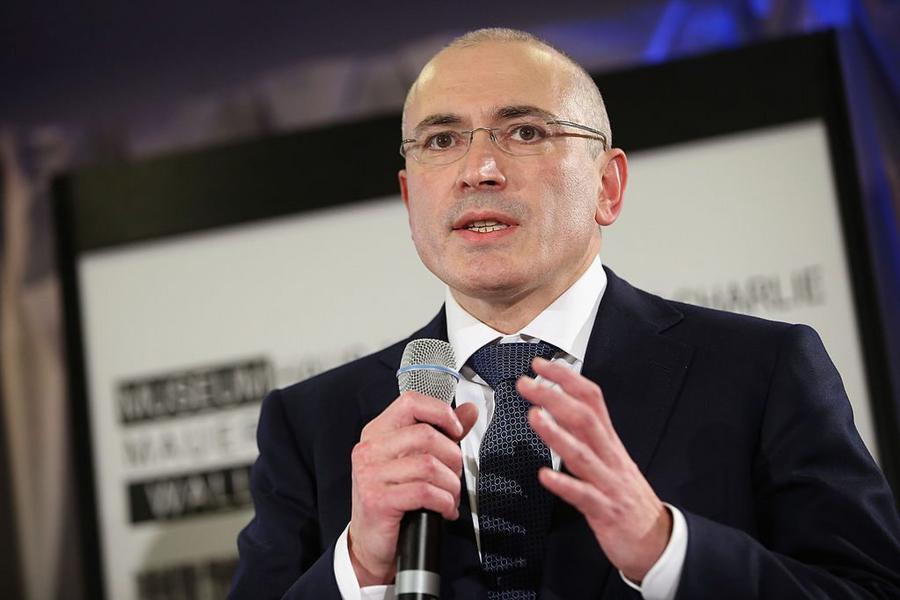
Mikhail Khodorkovsky / Sean Gallup/Getty Images
The Yukos Windfall
Khodorkovsky’s major breakthrough came in the early 1990s. During Russia’s chaotic transition to capitalism, state assets were sold off at fire-sale prices. He used Menatep to acquire shares in dozens of companies. In 1995, Menatep acquired the debt-ridden oil giant Yukos for just $300 million , while taking on $3.5 billion in liabilities.
It was a stunning deal. Yukos, anchored by Siberian oil fields, quickly became one of the largest and most profitable companies in post-Soviet Russia. Under Khodorkovsky’s leadership, it modernized operations, boosted output, and attracted foreign investment. By the early 2000s, Yukos was pumping more than a million barrels of oil per day.
Khodorkovsky’s fortune soared. By 2004, his empire gave him a net worth of $15 billion . That made him the richest person in Russia and the 16th richest person on earth. Life was good. But his growing wealth—and growing independence—was making the Kremlin uneasy.
Crossing Putin
Unlike many oligarchs who kept a low profile, Khodorkovsky spoke openly about corruption in Russia. He funded opposition political parties and independent media. In February 2003, during a televised meeting at the Kremlin, he confronted Vladimir Putin directly, accusing senior officials of taking bribes. It was a bold move—and a fatal one.
On October 25, 2003, Khodorkovsky was arrested aboard his private jet at a Siberian airport. Officially, he was to be questioned as a witness. In reality, he was charged with tax evasion, fraud, and embezzlement. The state quickly froze Yukos’s shares and launched a campaign that gutted the company’s value.
In 2005, Khodorkovsky was convicted and sentenced to nine years in prison. A second conviction followed in 2010 for embezzlement and money laundering. Critics and human rights groups widely viewed both trials as politically motivated.
A Fortune Lost
While Khodorkovsky sat in a Siberian labor camp, his empire was dismantled. Yukos assets were auctioned off—mostly to state-run oil giant Rosneft—and his personal fortune evaporated. In 2005, he transferred his remaining Yukos stake to longtime associate Leonid Nevzlin for an undisclosed sum. At that point, the shares were essentially worthless.
In 2013, after a decade behind bars, Khodorkovsky was suddenly pardoned by Putin and released just months before the Sochi Winter Olympics. He was flown to Germany and has lived in exile ever since.
In 2014, a group of Yukos shareholders, including Nevzlin, won a $50 billion arbitration award against the Russian state for the illegal seizure of the company. Khodorkovsky declined to participate in the suit and said he would not benefit from the judgment.
A Symbol of Risk
Khodorkovsky’s downfall remains a chilling precedent in Russia’s modern history. His arrest sent a message to other oligarchs: Stay out of politics, or risk losing everything. His story gained new relevance in July 2025 when Russian billionaire Konstantin Strukov— net worth $2 billion— was caught attempting to flee the country on his private jet . His assets were frozen and his passport canceled amid a Kremlin-driven nationalization effort.
As Khodorkovsky himself once joked, the only reason he built an empire in the first place was because he didn’t remember what had happened to others before him.
- Mikhail Khodorkovsky Net Worth
- Russian Government Ordered To Pay $50 Billion Settlement To Plundered Oil Company Shareholders. But Will They Pay?
- Is Vladimir Putin Secretly The Richest Person In The World?
- Basketball Billionaire Facing Full Court Press From Kremlin
- Vladimir Putin Has Set His Sights On Bringing Down Another Russian Billionaire
- These Five Billionaires Went From Having 10 Figure Bank Accounts To Being Flat Broke. Ouch.
