How One Man Squeezed Out A Small Fortune By Flipping Ketchup Bottles Upside Down
ByPaula Wilsonon February 28, 2025inArticles›Entertainment
Remember those " Real Men of Genius " Bud Light commercials? You know, the ones that humorously glorified fictional men who came up with simple yet brilliant inventions. Inventions like the giant taco salad, push-up bras, and boneless buffalo wings… Well, if Anheuser-Busch ever decides to resurrect that ad campaign, we know who should be their next honoree: Paul Brown .
You’ve probably never heard of Paul, but I guarantee his life has impacted you at some point this week. Maybe even today. His invention is probably in your fridge right now. All aspiring inventors need to pay attention to this story. Actually, even if you’re not an inventor, just someone who wants to get rich, Paul’s story is incredibly inspirational. Because, while some innovators like Elon Musk are busy trying to put rockets into space, Paul Brown kept it simple and humble. His innovation not only earned Paul a small fortune, but it also revolutionized plastic bottles and liquid storage forever.
So what was this revolutionary million-dollar innovation? It involves a very simple desire. The desire to turn ketchup bottles… upside down.
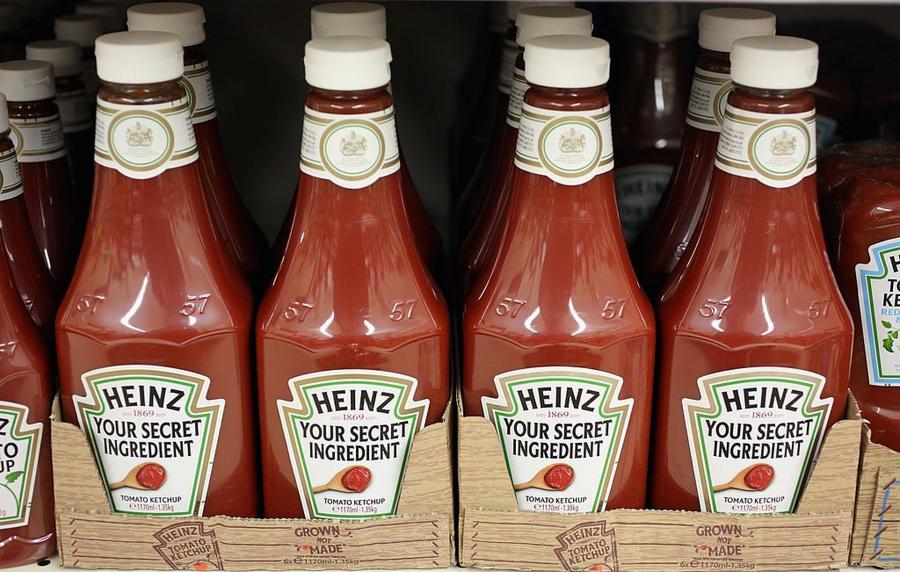
Heinz / Oli Scarff/Getty Images
The Ketchup Struggle Was Real
Kids today may never know the frustration that once existed every time you reached for a ketchup or mustard bottle. Even when you turned a full bottle over, nothing would come out. But the worst was when the bottle wasn’t full. If I had a nickel for all the times I remember sitting at a diner shaking and pounding a half-full ketchup bottle, desperately trying to cover my fries. You’d dig into the bottle with a knife. You’d smack the bottom of the bottle until your hand was purple. Where most of us saw hopeless frustration, Paul Brown saw dollar signs.
From a Small Shop to a Big Idea
In the early 90s, Paul Brown worked out of a small shop in Midland, Michigan. A designer and fabricator, he initially set out to make a valve that would allow shampoo bottles to be stored upside down without leaking. He promised a client he could make it, and he set out to do so, using a molding press, liquid silicone, and good old-fashioned ambition.
Brown disliked computers and often worked intuitively. He had the design fairly well mapped out, but the prototypes just weren’t working. The materials were expensive, and after burning through his own savings, he maxed out all of his credit cards. Undeterred, he borrowed thousands of dollars from eleven friends and family members, including his mother, to fund the project.
Still, he couldn’t quite get the design right. He needed the valve to open when the bottle was squeezed and automatically seal without leaking when the squeezing stopped. His first big potential buyer was set to arrive on Monday. By Friday, after 111 failed prototypes, he was desperate. His last hope was to ask his mold maker, Tim Socier, if he would pull a weekend all-nighter to make one final version.
Prototype #112 was the charm. By Monday morning, Brown had a working valve. His potential buyer became an actual customer, setting off a chain reaction that would change packaging forever.
The Valve That Changed Everything
Over the next few years, Brown’s patented valve became immensely popular. Gerber bought it for their no-spill sippy cups. NASA used it to create leak-proof drink cups for astronauts. The cosmetics industry quickly adopted it for shampoo and lotion bottles.
But the real breakthrough came when Heinz and its chief rival, Hunt’s, came knocking.
For decades, consumers had been storing their ketchup bottles upside down to combat ketchup’s stubborn refusal to flow. The problem? The bottle wasn’t designed to be stored that way, and when you opened it, ketchup would pour out uncontrollably.
Brown applied his valve technology to Heinz’s bottles. The result? A perfect, controlled squeeze of ketchup every time. No mess, no frustration. Heinz rolled out a massive ad campaign with the slogan " Ready When You Are ," and the upside-down ketchup bottle became an instant hit. Today, this design is the industry standard, and chances are you have one sitting in your fridge right now.
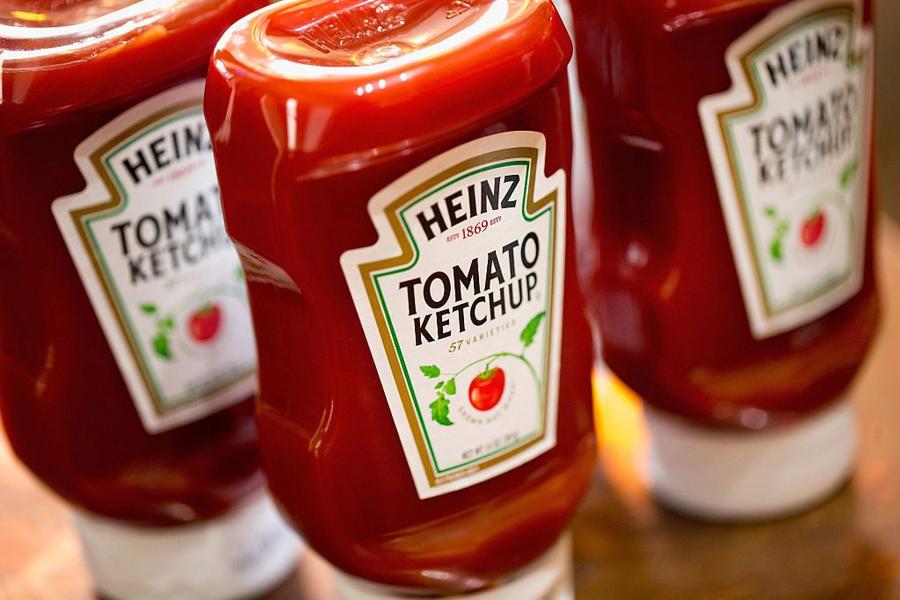
Heinz / Scott Olson/Getty Images
A Squeezable Fortune
In 1995, riding the wave of success that had begun just four years earlier, Paul Brown sold his company, Liquid Molding Systems, Inc., to AptarGroup for approximately $13 million . That’s the same as around $27 million in today’s dollars.
AptarGroup, a global leader in packaging solutions, folded Brown’s patented valve into its portfolio. The Midland, Michigan facility where Brown worked continued operating under Aptar, and the silicone valve for Heinz’s upside-down bottles is still made there today.
With his newfound wealth, Brown paid off all his credit cards and repaid everyone who had loaned him money—100 times over. Next, he bought a vacation home in Florida, an RV spot in Arizona and built a state-of-the-art barn/man cave. Unlike many entrepreneurs who stay on with their companies post-sale, Brown walked away completely, choosing to enjoy the fruits of his labor rather than continue working in the industry.
Paul Brown’s Final Chapter
Paul Brown lived nearly three decades after selling Liquid Molding Systems, enjoying a quiet retirement. Though he never sought the public spotlight, his simple yet brilliant invention became a staple in households worldwide.
Paul Brown passed away in 2024 at the age of 82. His obituary, published by the Cremation Society of Mid-Michigan, honored him as a beloved father, a veteran, and a man whose creativity changed the way millions of people use everyday products. His legacy lives on every time someone gives a ketchup bottle a quick squeeze and gets just the right amount—no mess, no fuss.
Paul Brown wasn’t trying to send people to Mars or build self-driving cars. He simply saw a common frustration and solved it. And in doing so, he revolutionized an industry, made millions, and left behind a small but significant mark on the world. Real Men of Genius, indeed.
- San Francisco’s Next Mayor Is A Billionaire Heir Thanks To His Stepfather’s Great-Grand-Uncle-In-Law And… One Of America’s Best Inventions
- The World’s Most Expensive Whisky Just Sold For $1.5 Million
- How A Divorced Single Mom Secretary Invented Liquid Paper, Made A Fortune And Raised A Future Music Star
- One Of The Richest Members Of Congress Owes His Fortune To A 150-Year-Old American Invention
- This $25 Million Connecticut Estate Accidentally Exposed The Strangest “Reclusive Millionaire” Story Of All Time
- From Homeless Dreamer To Billionaire Tequila And Beauty Tycoon: The Inspiring Rags to Riches Story of John Paul DeJoria
San Francisco’s Next Mayor Is A Billionaire Heir Thanks To His Stepfather’s Great-Grand-Uncle-In-Law And… One Of America’s Best Inventions
ByBrian Warneron November 13, 2024inArticles›Billionaire News
Last week, a philanthropist named Daniel Lurie was elected to serve as the next mayor of San Francisco. Why are we talking about this on CelebrityNetWorth? Good question!

(Photo by Gabrielle Lurie/San Francisco Chronicle via Getty Images)
Necessity Gives Birth
Daniel Lurie was born on February 4, 1977, in San Francisco. His father, Brian Lurie, is a rabbi. His mother Miriam Lurie (née Ruchwarger), goes by “Mimi.” Unfortunately, Brian and Mimi divorced when Daniel was just two years old. When he was four, Mimi remarried. Daniel’s new stepfather was a guy named Peter E. Haas.
Peter Haas was born in 1918, the son of Walter A. Haas and Elise Haas (née Stern). Walter’s father was a German immigrant who founded a grocery store called Hellman, Haas, and Company. Today, that grocery store is called Smart & Final. But this is not the invention/fortune we’re talking about today.
Peter’s mother, Elise, was the daughter of Sigmund Stern. Sigmund was the son of David and Fanny Stern (née Strauss). In the 1840s, Fanny and David operated a modest clothing and merchandise import company in San Francisco.
In the late 1840s, gold was discovered in Northern California. What we now call the “Gold Rush of 1849” inspired an estimated 300,000 people from all over the world to flock to California to seek their own gold fortunes. Miners became known as “49ers.” They toiled tirelessly for years in grueling conditions.
At the time, most work pants used by the average 49er were made out of canvas. Canvas could rip to shreds after a few days of mining so most 49ers took to laboring in their skivvies because their pants were so bad.
As the gold rush boomed, Fanny Stern’s brother moved out to San Francisco to work in the family business. He was intrigued by the obvious flaw created by canvas pants, so he got to work seeking a better alternative.
This budding entrepreneur’s goal was to create a pair of pants made of extremely durable fabric. Fabric that wouldn’t rip even under the most grueling gold mining conditions. The fabric he landed on was denim.
To make the pants extra reinforced, he added one more innovation: Circular metal rivets at various stress points, like the pocket corners.
The design was patented in 1873.
If you’ll recall from a moment ago, Fanny Stern was born Fanny Strauss. Fanny’s brother was named Levi. His patented invention was Levi Strauss denim jeans.
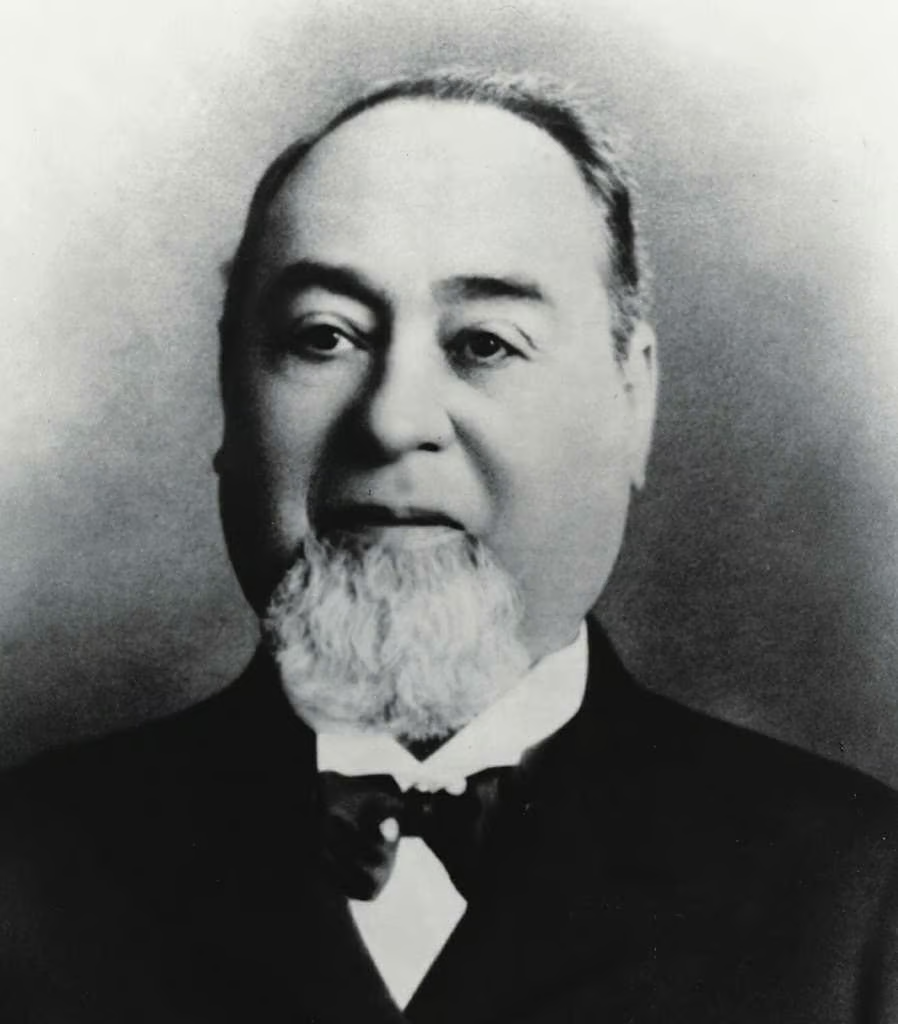
Levi Strauss
When Levi died on September 26, 1902, at the age of 73, he left behind an estate valued at $30 million . That’s the same as around $900 million in today’s dollars. He was never married and had no kids. He left the majority of his wealth to various charities and orphanages.
He left his company, plus $6 million in working capital, to his four nephews. One of those nephews was Sigmund Stern. In 1914, Sigmond’s daughter Elise married Walter A. Haas. For the next 100+ years, members of the Haas family have controlled and been enriched by Levi Strauss’s invention.
Walter A. Haas had three children. A daughter named Rhoda and two sons, Walter Jr. and Peter E. Haas . In 1981, Peter married a recently divorced single mom named Mimi Lurie. Peter died in 2005 at the age of 86. He left his entire fortune to Mimi.
The Haas family took Levi Strauss public in 1971. They took it private in 1985. In 2019, they took it public again . When Levi Strauss went public in 2019, roughly 200 Haas family members owned a collective 63% of the company. The largest individual shareholder, with a 17% stake, was… Mimi Haas. The widow of the great-grand-nephew of Levi.
Today, she owns around 11% of the company, which has a current market cap of just under $7 billion. That means today, Mimi Haas has a net worth of $1.5 billion .
The extended Haas family is worth a collective $5.5 billion , all thanks to a single invention patented by a man who, to many of them, would be their great-great-grandfather’s grand-uncle-in-law.
- One Of The Richest Members Of Congress Owes His Fortune To A 150-Year-Old American Invention
- Planned IPO Of Levi Strauss & Co. Will Mint New Denim Billionaire
- With A Net Worth of $350 Billion Elon Musk Just Broke His Own Record For Richest Person In History
- Elon Musk May Become A Half-Trillionaire Tomorrow
- How One Man Squeezed Out A Small Fortune By Flipping Ketchup Bottles Upside Down
- How A Door-To-Door Fax Machine Saleswoman Turned Pantyhose And Sweltering Florida Heat Into A Billion-Dollar Under Garment Empire
